Posts

The Soul Inside

It's black history month, six days in, and not a morsel from Gotham City Soul. Now that I'll be writing a blog for my magazine's Web site, I'm more inclined to veer toward other definitions of soul here. So I'm leaving black history and culture and New York City and American soul for parts varied, strange, and sometimes unknown (at least by me) to examine the spirit of things, go to places that may not be pretty, or especially pleasant all of the time, but will surely move you. It is my hope that you will be moved to movement.
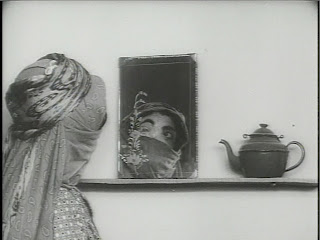
The House Is Black/خانه سیاه است

Image
A month or so ago I came upon a mini Iranian film festival on public television. There were two short films by Mohsen Makhmalbaf, The School That Was Blown Away (1996), and Images from the Qajar Dynasty (1992). But there was also a film that was something beautiful and terrible all at once, The House is Black ( Khaneh siah ast in Farsi) created in 1962 by a woman I had not known of until now: a renowned Persian poet named Forough Farrokhzad. Essentially, The House is Black is a documentary of a leper colony, an awful thing given beauty and humanity by Farrokhzad. In 1962 there were two drugs, Promin and Dapsone, used with limited and painful success to ease the disease, but a true treatment wasn’t developed until the 1970s. It is clear that even the earlier treatments did not make their way to this desolate colony in Iran. Still, with her unflinching shots of these afflicted people as they go about their daily lives, breathtaking is the scene of a woman applying eyeliner, and a...

The Spirit of the Thing

I was in a marching band—a bigger bunch of spoiled and entitled kids you probably would not have met. We took our opportunity to play instruments and be in a band for granted. Not these kids . It's often when I wonder how some of my fellow Americans can possibly share the same citizenship with me. It's more rare that I'm glad to claim a kinship. These are one of of those times This is the spirit of the thing, this impending presidency, this inauguration and I intend to savor this rare and gleaming moment for as long as I can. It may never come again in my lifetime.

Santa-dote

Image
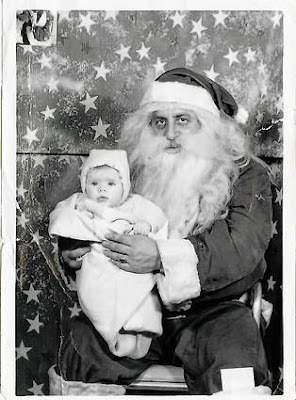
In an attempt to provide an antidote to some of the syrupy (and fake) nonsense that goes on at Christmas time, and to provide some dark humor for those out there who dread the holidays, I'm leaving our regularly scheduled program to bring you Santa-dote . Last year I wrote about St. Nicholas Day, and how it has a dark side (if you check that link out, take some time for David Sedaris's " Si x to Eight Black Men") . This year Santa Claus, who is a direct American descendant of St. Nicholas, gets a bit of a drubbing. I have nothing against Santa, just think that if you look at him from a certain perspective, he can seem frightening, absurd, or just damn funny. I had this conversation with my mom the other day where we were sort of taking issue with old Santa Claus. She said that nowadays they've got him running around Germany, amok, which would be fine with her, if he weren't an American invention . German kids are supposed to get their gifts from the Kristkin...

At 5:15 PM on December 2, 2008

Image
We lost a great lady and an amazing soul. The singer, musician, and activist Odetta died yesterday evening at Lenox Hill hospital in New York City. She was 77. I didn't find out about it until this morning, when I opened my e mail and saw messages from several folks who knew her well, particularly her manager of 12 years, Doug Yeager. It was he, prompted by David Lander, a regular writer for American Legacy, who set up an interview with this grand dame of folk music, and made it possible for us to include her in the pages of our magazine. I approached the telephone interview with excitement and a bit of trepidation—Odetta's gorgeous voice was a regular presence in our house when I was growing up in the 1960s and 1970s. She had performed at the 1963 March on Washington, singing “Freedom Trilogy”; marched in 1965 with Rev. Martin Luther King, Jr., and some 25,000 others from Selma to Montgomery; and protested against the United States’ involvement in the Vietnam War. The tradi...

The First Black Recording Star? Probably!

"Emerson needed more musicians, preferably cheap and loud. What about that middle-aged black man with the melodious whistle and hearty laugh he’d seen performing for coins at the Hudson River ferryboat terminal? Johnson listened to the proposition of the neatly dressed young man and said, “Why, sure . . . how much did you say you would pay?” “Twenty cents a song,” said Emerson, “and you can work all afternoon.” “Well, suh , just show me where you want me to go,” said Johnson, throwing in one of his hearty laughs for free. Emerson had his second recording artist." --From Lost Sounds: Blacks and the Birth of the Recording Industry, 1890-1919, by Tim Brooks. One could make a case that the American music industry was born when the inventor Thomas Edison first devised a way to record sound on tinfoil-coated cylinders in 1877, famously consigning his own voice to posterity (it should be noted that a recently uncovered audio fragment of the French folk song “Au Clair de Lune...

So Much Has Been Said . . .

. . .and I will be compelled to say more in my magazine. I don't have the eloquence of others, and my words will doubtless be lost in the millions of other words written. I cried for days after 9-11, tears of grief, my heart was broken. As of last Tuesday I cry for joy, my heart finally healed. (For my honored ancestors, my father Miles Peterson; grandparents Ransom Peterson, Annie Peterson, nee Johnson, and Fannie Mae; my great-grandparents Fletcher and Polly Johnson; Silver and Susiann Peterson; my great-great grandparents Amos and Saleta Battle, and all of my ancestors from Africa, and all over the world)